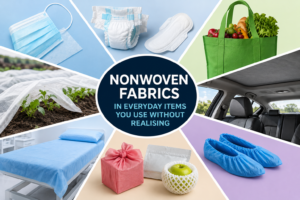
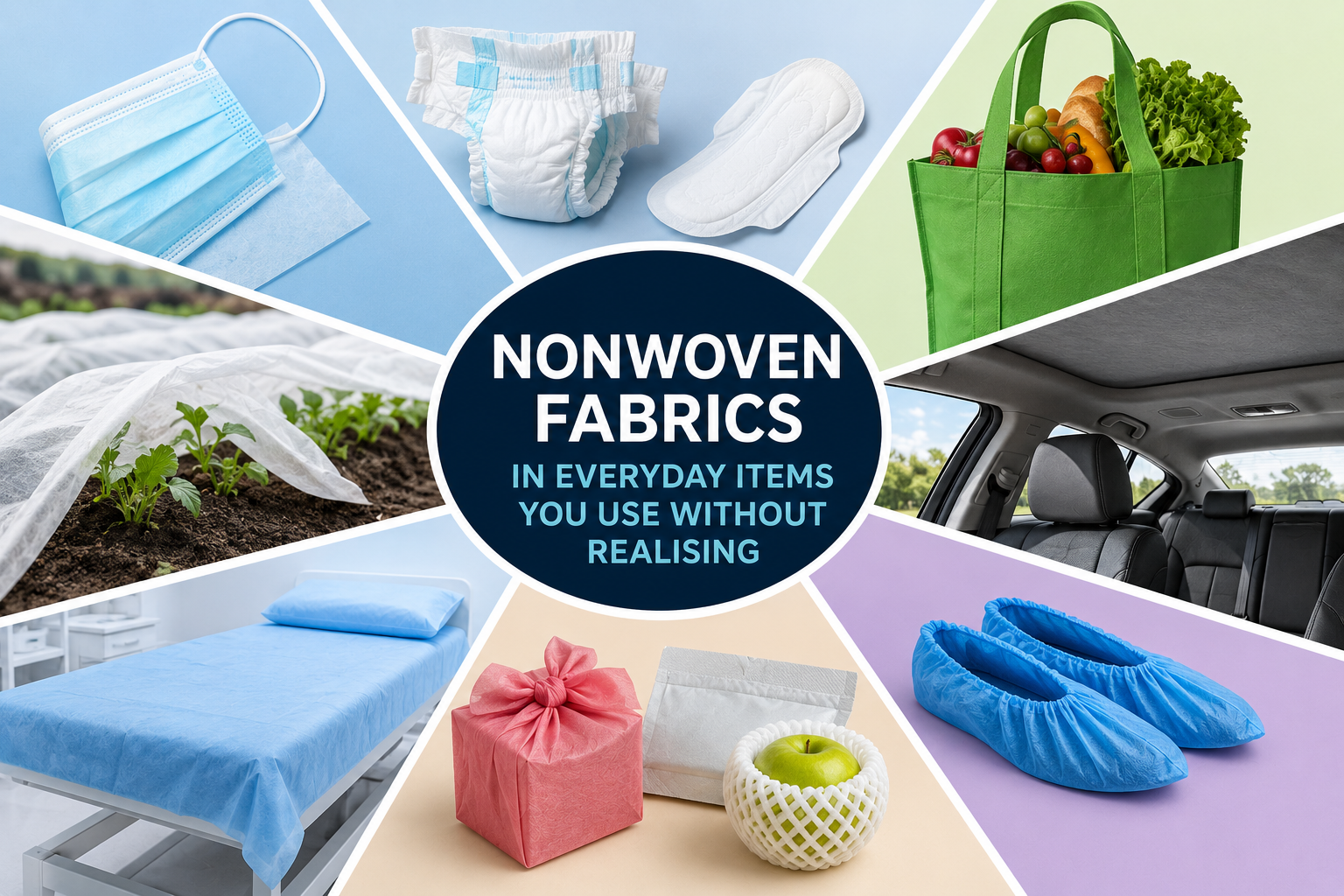
You used nonwoven fabric this morning before you even left the house. The wipe you cleaned with, the face mask you wore, the shopping bag you grabbed on the way out are all made from nonwoven fabric. Most people have never heard the term, yet they interact with nonwoven materials dozens of times every single day.
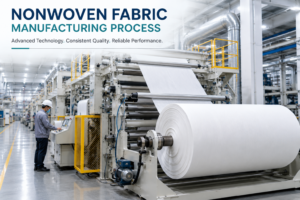
Nonwoven fabric is not woven or knitted like regular cloth. It is made by bonding fibers together using heat, pressure, or chemicals which makes it faster to produce, lighter in weight, and more versatile than traditional fabric. That is exactly why it is used in so many everyday products across hygiene, healthcare, agriculture, packaging, and more.
In this guide we will walk you through exactly where nonwoven fabrics show up in your daily life from your bathroom cabinet to your car, your kitchen to your farm and why this material has quietly become one of the most important fabrics in the modern world.
What Makes Nonwoven Fabric Different from Regular Fabric
When most people think of fabric, they picture threads woven over and under each other. Nonwoven fabric works completely differently. Instead of weaving or knitting, it is made by pressing, heating, or chemically bonding fibers directly into a sheet. No loom, no thread, just fibers held together into a strong, flexible material.
Because it does not need to be woven, nonwoven fabric can be produced faster and at a lower cost than traditional fabric. It can also be made for very specific purposes thicker or thinner, softer or stronger, water resistant or absorbent depending on what the product needs.
A simple way to understand it is that a cotton shirt is woven, made to be washed and worn for years. A baby diaper topsheet is nonwoven, made to be soft, skin friendly, and let liquid pass through quickly. Both are fabrics but built for completely different jobs and made in completely different ways.
This is why nonwoven fabrics show up in so many everyday items that most people never think about and why manufacturers around the world rely on them for large scale production.
Nonwoven Fabrics in Your Home
Your home is full of nonwoven fabric and you probably never noticed. Here are the most common everyday items in your house that are made from nonwoven materials.
Wet Wipes and Baby Wipes
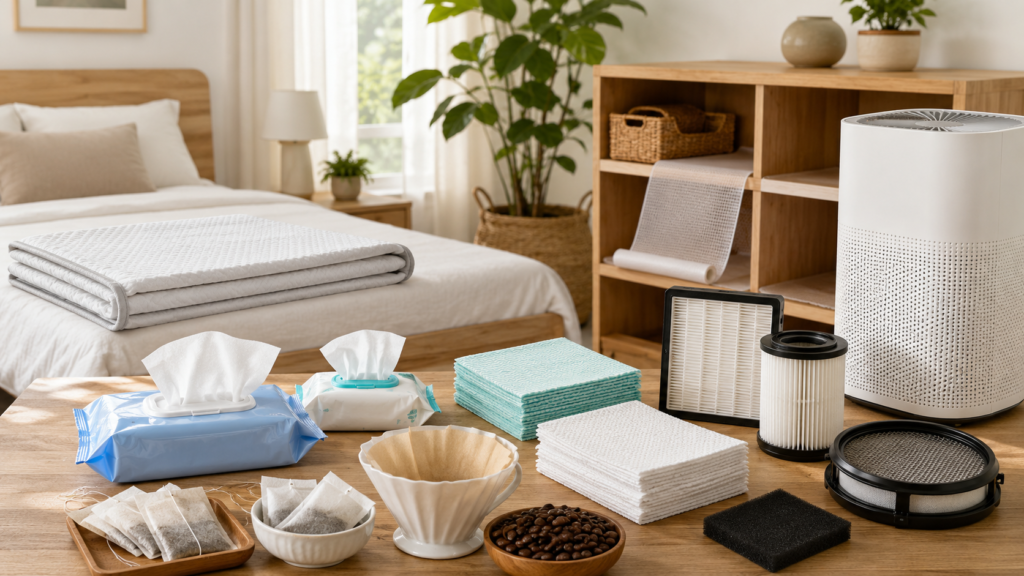
Wet wipes and baby wipes are part of our hygiene materials range . Spunlace is soft, strong when wet, and gentle enough for direct skin contact. It is one of the most widely used nonwoven fabrics in household and personal care products across the GCC.
Disposable Cleaning Cloths
Those single-use cleaning cloths you use in the kitchen or bathroom are made from spunbond nonwoven fabric. They are lightweight, absorbent, and strong enough to scrub surfaces without tearing and they cost almost nothing to produce at scale because of how fast spunbond fabric can be manufactured.
Tea Bags and Coffee Filters
The next time you make a cup of tea, look closely at the bag. That thin, porous material that holds the tea leaves and lets the hot water pass through is a wet laid nonwoven fabric. It is food safe, heat resistant, and fine enough to filter particles while allowing liquid to flow freely.
Mattress Covers and Furniture Lining
The layer of fabric underneath your mattress and inside your sofa cushions is almost always a spunbond nonwoven. It is used as a backing and lining material because it is cheap, durable, and prevents dust and small particles from passing through all without adding unnecessary weight or bulk to the furniture.
Air Purifier and Vacuum Cleaner Filters
The filter inside your air purifier or vacuum cleaner that traps dust, pollen, and fine particles is made from meltblown nonwoven fabric. Meltblown has an ultra fine fiber structure that creates a dense barrier capturing even microscopic particles while still allowing air to pass through freely.
Nonwoven Fabrics in Personal Care and Hygiene
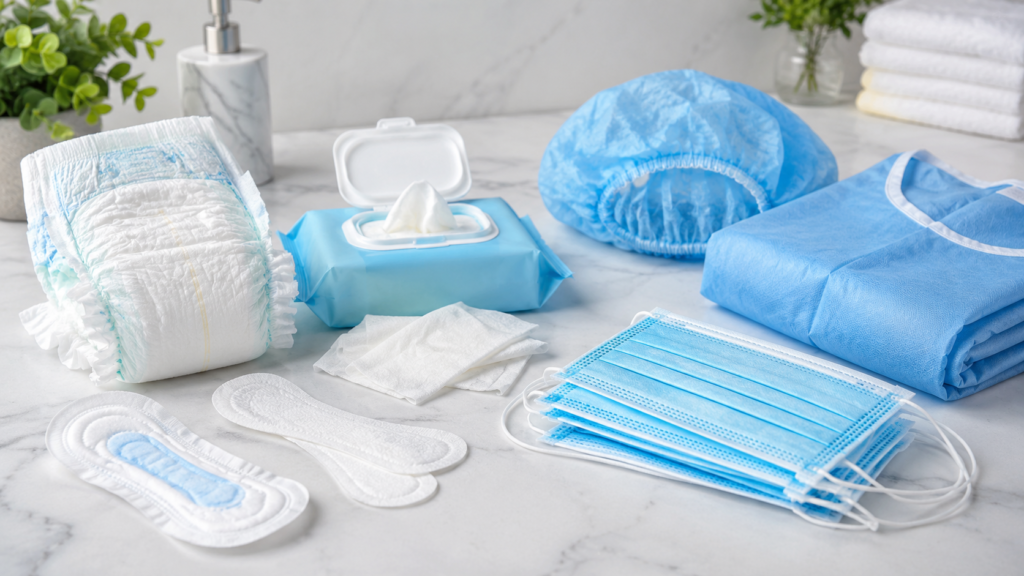
Personal care and hygiene is where nonwoven fabrics are used the most. Almost every disposable hygiene product you use on a daily basis has at least one layer of nonwoven fabric in it and in most cases several layers, each doing a different job.
Baby Diapers
A baby diaper is one of the most complex nonwoven products in everyday use. The soft topsheet that sits against the baby’s skin is made from hydrophilic nonwoven fabric designed to pull liquid away from the skin quickly and pass it through to the absorbent core underneath. The outer backsheet that keeps moisture in is made from hydrophobic nonwoven engineered to repel liquid from the outside. Two different nonwoven fabrics, two completely different jobs, working together in one product.
Sanitary Pads and Panty Liners
Just like diapers, sanitary pads use multiple layers of nonwoven fabric. The soft topsheet that contacts the skin is spunbond or carded nonwoven chosen for its softness and quick liquid transfer. The core uses airlaid nonwoven for maximum absorbency. Every layer is engineered specifically for comfort, hygiene, and performance.
Face Masks
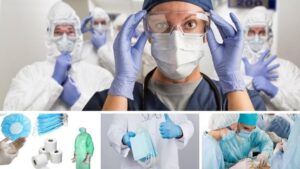
The face mask you wear every day is made from multiple layers of nonwoven fabric working together. The outer and inner layers are spunbond nonwoven soft, breathable, and skin friendly. The critical middle filtration layer is meltblown nonwoven with ultra fine fibers that filter out dust, bacteria, and airborne particles. Without nonwoven fabric, the modern face mask simply could not exist.
Wet Wipes and Facial Cleansing Sheets
Facial cleansing wipes, makeup removal sheets, and personal hygiene wipes are all made from spunlace nonwoven fabric. Spunlace is produced by entangling fibers with high pressure water jets which creates a soft, strong, and smooth material that is gentle on skin but effective at cleaning.
Surgical Caps and Gowns
Every disposable surgical cap, gown, and drape used in hospitals and clinics across the GCC is made from SMS nonwoven a three layer composite of spunbond, meltblown, and spunbond fabric. SMS provides the perfect combination of softness, breathability, and barrier protection that medical environments require.
Nonwoven Fabrics in Your Wardrobe and Shopping
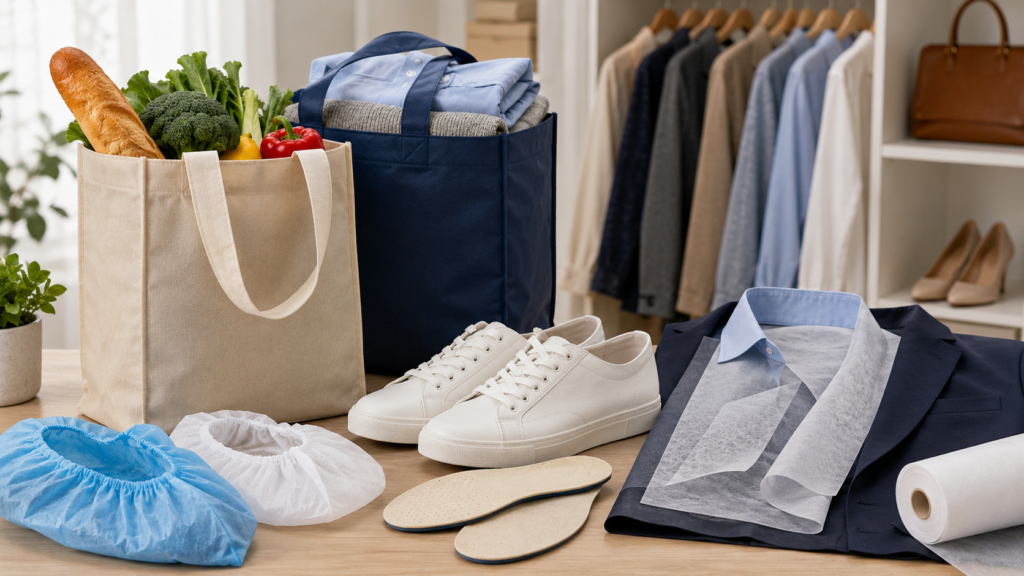
Nonwoven fabrics are not just in your bathroom cabinet they are in your wardrobe and shopping bag too. Here are the everyday items in your daily routine that you may not have realised are made from nonwoven materials.
Reusable Shopping Bags
reusable non woven bags you see in every supermarket and retail store across the GCC are made from spunbond polypropylene nonwoven fabric. They are lightweight, strong enough to carry heavy groceries, and can be reused hundreds of times before wearing out. They are also one of the most eco-friendly alternatives to single use plastic bags which is why governments and retailers across the UAE, Saudi Arabia, and Oman are actively promoting them.
Shoe Lining and Insoles
The soft lining inside your shoes and the insole underneath your foot are made from needle punched nonwoven fabric. Needle punched nonwoven is produced by mechanically interlocking fibers with barbed needles creating a dense, cushioned material that is durable, breathable, and comfortable against the foot all day long.
Disposable Shoe Covers
The disposable shoe covers used in hospitals, clean rooms, construction sites, and food processing facilities are made from spunbond nonwoven fabric. They are lightweight, slip resistant, and cheap enough to throw away after a single use which makes them ideal for any environment where hygiene and cleanliness are critical.
Garment Interlining and Fusible Fabric
The stiff layer inside the collar of your shirt or the structured front panel of your jacket is a thermal bonded nonwoven interlining. It is fused to the outer fabric using heat and gives the garment its shape, structure, and body. Without nonwoven interlining, most formal and structured clothing would look soft, limp, and unfinished.
Nonwoven Fabrics in Your Car
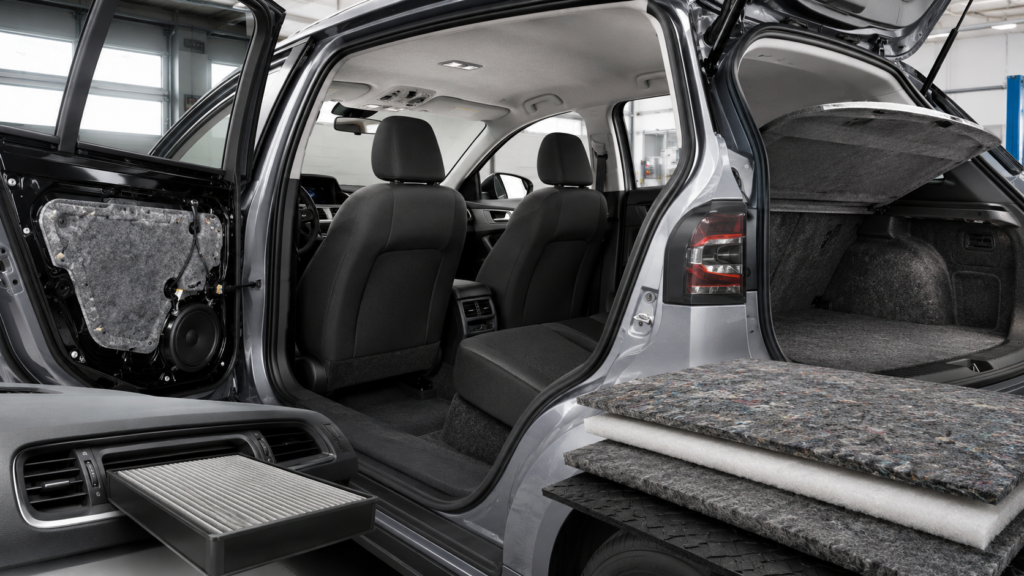
You might not think about fabric when you think about your car, but nonwoven materials are used in almost every part of your car interior and under the hood from car seat covers and cabin air filters to sound insulation panels that keep your ride quiet and comfortable. View our automotive interior fabric to see how our spunbond nonwoven fabric performs in demanding automotive applications.
Car Seat Covers and Headliners
The fabric on your car seats and the soft material on the inside roof of your car are made from needle punched nonwoven fabric. It is chosen because it is durable, easy to clean, and can handle daily wear and tear without breaking down quickly.
Cabin Air Filters
The filter that cleans the air coming into your car through the vents is made from meltblown nonwoven fabric. Its ultra fine fibers trap dust, pollen, and pollution before the air reaches you and your passengers. In the GCC where sand and dust are a daily reality, this filter works harder than almost anywhere else in the world.
Under Carpet and Boot Lining
The layer of material underneath your car carpet and lining the boot of your car is spunbond nonwoven. It acts as a barrier between the metal floor and the carpet protecting against moisture, reducing road noise, and keeping the interior clean.
Sound Insulation Panels
The panels inside your car doors and under the dashboard that reduce road noise and vibration are made from thermal bonded nonwoven fabric. Thicker and denser than other nonwoven types, these panels absorb sound effectively making your car quieter and more comfortable to drive.
Nonwoven Fabrics in Packaging
Packaging is one of the fastest growing applications for nonwoven fabrics and for good reason. Nonwoven materials are lightweight, strong, and cheap to produce at scale, making them a practical choice for a wide range of packaging needs.
Reusable Non Woven Bags
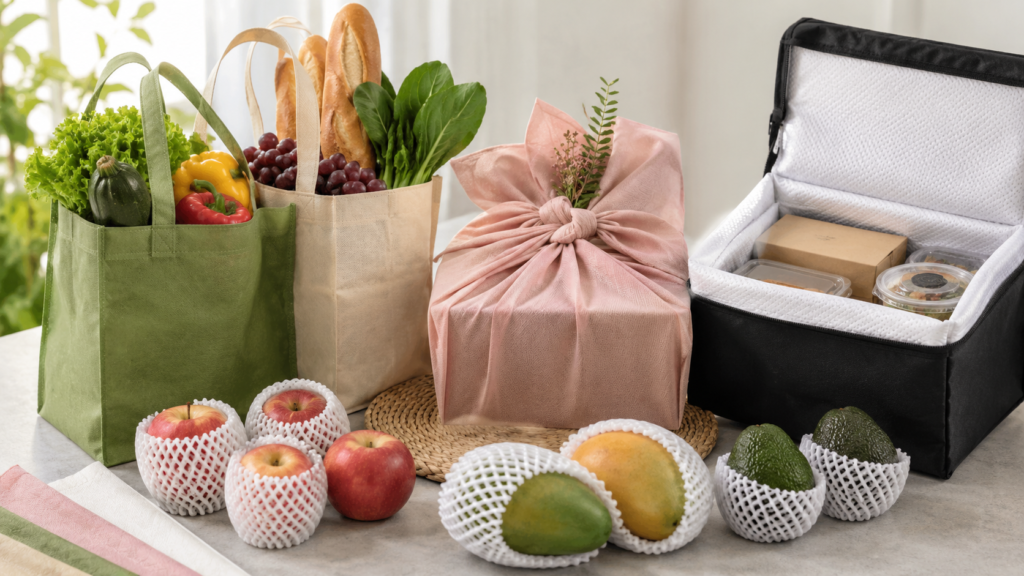
Reusable shopping bags and gift wrapping fabric are the most visible nonwoven products in everyday life and they are made from spunbond polypropylene nonwoven fabric for good reason. Strong enough to carry heavy items, lightweight enough to fold into a pocket, and durable enough to be used hundreds of times, these bags have become the standard alternative to single use plastic bags in supermarkets and retail stores across Oman and the wider region. Browse our bags and packaging range to find the right fabric solution for your packaging needs.
Gift Wrapping Fabric
The soft fabric used to wrap gifts and hampers in retail stores and gift shops is spunbond nonwoven. It looks elegant, comes in a wide range of colors, and costs far less than traditional gift wrapping paper or fabric. It is also stronger than paper which means the gift stays protected during handling and delivery.
Fruit and Vegetable Protective Packaging
Individual fruits like mangoes, apples, and avocados are often wrapped in soft nonwoven sleeves before being packed into boxes for shipping. The nonwoven sleeve protects the fruit from bruising during transport without trapping moisture or heat keeping the produce fresh for longer.
Insulated Delivery Packaging
The insulated liners inside food delivery bags and temperature controlled shipping boxes are made from nonwoven composite materials. They keep food hot or cold during delivery by trapping air between layers of nonwoven fabric which acts as a natural insulator without adding significant weight or bulk to the packaging.
Nonwoven Fabrics in Healthcare and Medical Settings
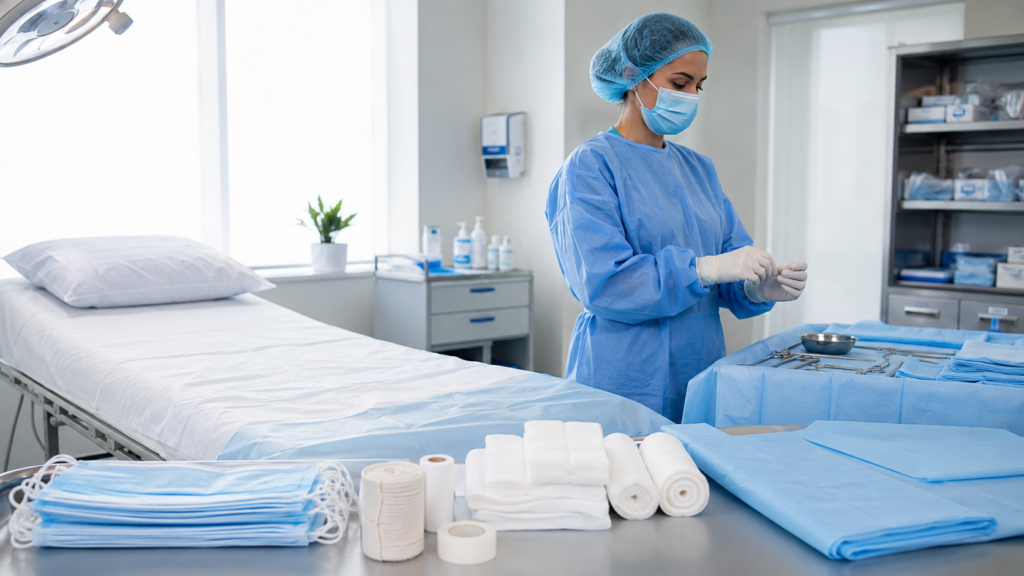
Healthcare is one of the most important applications for nonwoven fabrics. Every hospital, clinic, and medical facility uses nonwoven materials every single day because they are hygienic, affordable, and designed for single use which reduces the risk of cross contamination between patients.
Surgical Drapes and Gowns
Every disposable surgical gown and drape used in operating rooms is made from SMS nonwoven fabric, a three layer combination of spunbond, meltblown, and spunbond. SMS provides a strong barrier against fluids and bacteria while remaining breathable and comfortable enough for surgeons and medical staff to wear for long procedures.
Wound Dressings and Bandages
The soft absorbent layer in wound dressings and bandages that sits directly against the skin is made from spunlace nonwoven fabric. It is gentle enough for sensitive and damaged skin, absorbent enough to manage wound fluid, and strong enough to stay intact during dressing changes without falling apart.
Disposable Bed Sheets in Hospitals
The disposable bed sheets and pillow covers used in hospitals, clinics, and examination rooms are made from spunbond nonwoven fabric. They are changed after every patient eliminating the risk of cross contamination and reducing the laundry burden on medical facilities. They are lightweight, cost effective, and hygienic by design.
Face Masks and Respirators
Every disposable face mask has at least three layers of nonwoven fabric. The outer layer is spunbond for structure and shape. The middle layer is meltblown for filtration. The inner layer is soft spunbond for comfort against the face. Together these three layers create a mask that is breathable, effective, and cheap enough to use once and dispose of safely.
Why Manufacturers in Oman Choose Nonwoven Fabrics
Nonwoven fabrics have become the material of choice for manufacturers across Oman and the wider region and it is not hard to understand why. Here are the main reasons manufacturers are choosing nonwoven over traditional fabric for their products.
Lightweight and Cost Effective
Nonwoven fabric is significantly lighter than woven or knitted fabric of the same thickness. That means lower shipping costs, easier handling on the production line, and less raw material needed per unit. For manufacturers producing thousands or millions of units every month, that difference adds up quickly.
Customizable for Any Application
Nonwoven fabric can be engineered to exact specifications. GSM can be adjusted from as low as 8 to as high as 180 depending on how light or heavy the final product needs to be. Width, color, texture, and finish can all be customized. Whether you are making baby diapers, agricultural covers, or reusable shopping bags, nonwoven fabric can be produced to match your exact requirements.
Hydrophilic or Hydrophobic Made for the Job
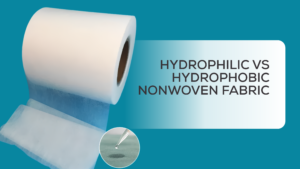
One of the biggest advantages of nonwoven fabric is that it can be made to either attract or repel water depending on the application. Hydrophilic nonwoven pulls liquid through quickly ideal for diaper topsheets and sanitary pads. Hydrophobic nonwoven repels liquid ideal for outer layers and protective covers. The same base material engineered two completely different ways for two completely different jobs.
Eco Friendly and Recyclable
Modern nonwoven fabrics made from polypropylene are fully recyclable. Manufacturers across Oman who want to meet sustainability targets and reduce their environmental footprint can source nonwoven fabrics that are produced using responsible manufacturing practices and recyclable materials without sacrificing the performance or consistency their production line requires.
Local Supply from Oman
Sourcing nonwoven fabric locally from a manufacturer based in Oman means shorter lead times, lower shipping costs, and faster response when production requirements change. It also means easier communication, simpler logistics, and the ability to request samples and get them quickly without waiting weeks for an overseas shipment.
How to Choose the Right Nonwoven Fabric for Your Product
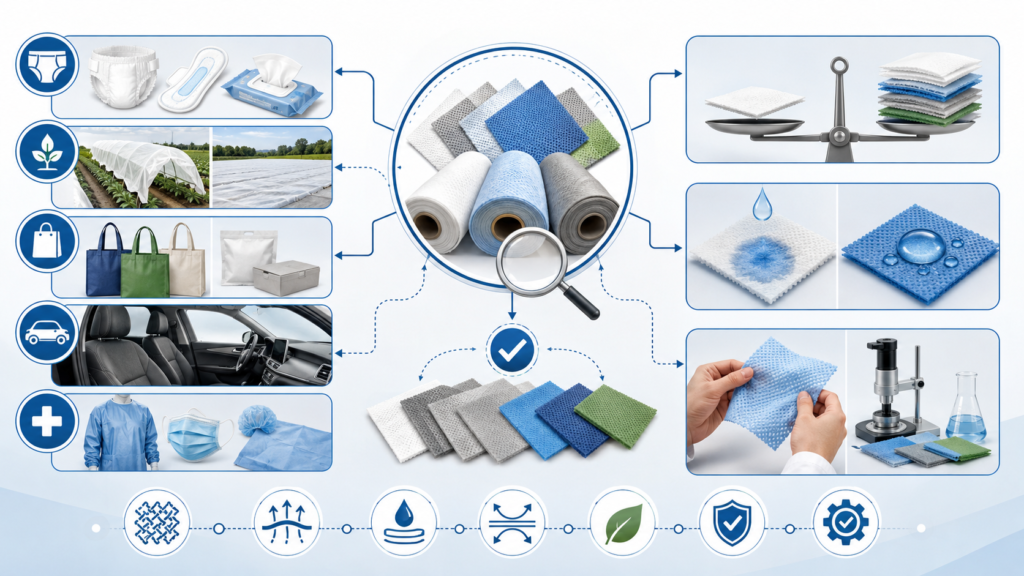
If you are a manufacturer or buyer looking to source nonwoven fabric for the first time, choosing the right type can feel confusing. There are many options and the wrong choice can affect your product quality, production cost, and end customer experience. Here is a simple guide to help you decide.
Start with the Application
The first question to ask is what the fabric will be used for. Hygiene products need soft, skin friendly fabrics with quick liquid transfer. Agricultural applications need UV stabilised, breathable fabrics that can handle outdoor conditions. Packaging needs strong, lightweight fabrics that look presentable. Automotive applications need dense, durable fabrics that handle heat and wear. Every application has a fabric type that works best for it and starting with the application makes every other decision easier.
Choose the Right GSM
GSM stands for grams per square meter and it tells you how heavy or light the fabric is. Low GSM fabrics between 8 and 20 are thin, lightweight, and used for products like diaper topsheets and face mask layers. Medium GSM fabrics between 20 and 60 are used for shopping bags, crop covers, and disposable gowns. High GSM fabrics between 60 and 180 are used for furniture lining, automotive interiors, and heavy duty packaging. Choosing the wrong GSM means your product will either be too weak or unnecessarily heavy and expensive.
Decide Between Hydrophilic and Hydrophobic
If your product will come into contact with liquid ask yourself which direction the liquid needs to go. If the liquid needs to pass through the fabric like in a diaper or sanitary pad you need hydrophilic nonwoven. If the liquid needs to be blocked or repelled like in a protective cover or outer layer you need hydrophobic nonwoven. Getting this wrong means your product will not perform the way your customer expects.
Always Request Samples Before Bulk Orders
No matter how clear the specification looks on paper, always request a free sample before committing to a bulk order. Feel the fabric, test its strength, check the GSM, and run it through your production line before placing a full order. A good nonwoven fabric manufacturer will always provide samples quickly and support you with technical data to help you make the right decision.
Conclusion
Nonwoven fabrics are in almost everything you use every single day from the wipe you clean with in the morning to the filter in your car, from the diaper keeping your baby dry to the bag you carry your groceries home in. Most people never notice them because they work quietly in the background doing exactly what they are designed to do.
For manufacturers and buyers across Oman, nonwoven fabric is the foundation of some of the most important products in hygiene, healthcare, agriculture, packaging, and automotive industries. Choosing the right fabric type, the right GSM, and the right supplier makes a direct difference to your product quality and production cost.
Unique Solutions manufactures a full range of spunbond nonwoven fabrics in Oman hydrophilic, hydrophobic, super soft, antistatic, and FR treated all available for bulk orders across the region. Whether you need a small sample to test or a full container shipment, our team will help you find the right fabric for your product.
Request a free sample today before committing to any order.