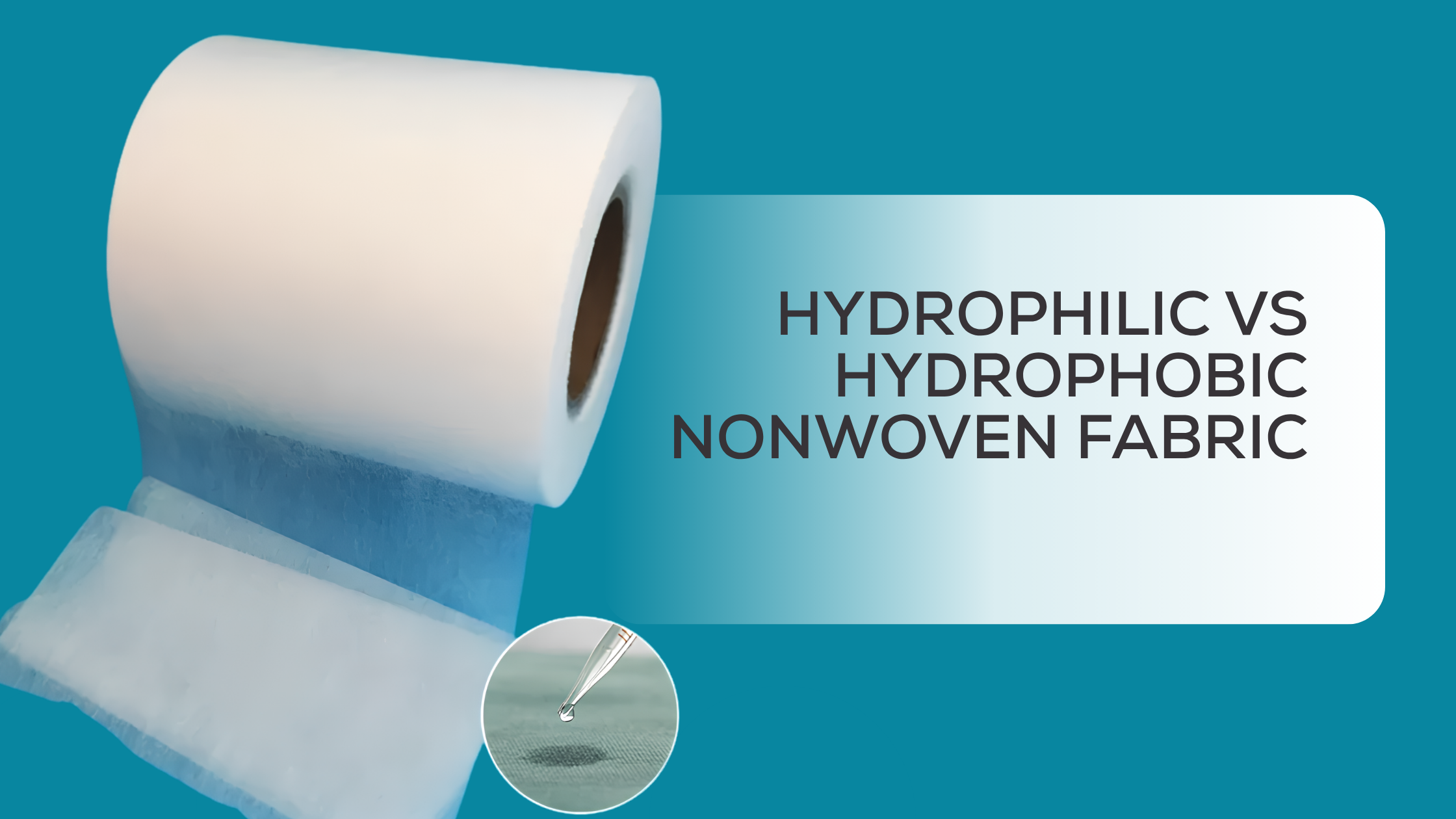
Nonwoven fabric is among the most frequently used material in the manufacture of hygiene products, medical products, and industrial manufacturing because of its low weight and cost, and its flexibility, although not all nonwoven fabrics react in the same manner when in contact with liquid, which explains why we use the words hydrophilic and hydrophobic to describe the two different types of nonwoven fabric, as one is made for absorbing water while the other is for resisting water, and knowing the hydrophilic vs hydrophobic nature of nonwoven fabric is one of the most crucial aspects of nonwoven fabric to understand.
In this guide, we will discuss what hydrophilic nonwoven fabric and hydrophobic nonwoven fabric are, how each one works, where they’re used, and how manufacturers decide which of these hydrophilic vs hydrophobic materials fits a given product.
What Is Hydrophilic Nonwoven Fabric?
Hydrophilic nonwoven fabric is designed to attract and absorb water rather than repel it, its fibers are treated in this way that liquid spreads across and soaks into the material instead of beading on the surface, making it ideal for products where moisture needs to be pulled away from the skin. This is typically achieved through the choice of raw fiber, a hydrophilic finishing agent, or additives introduced during spinning, since polypropylene nonwoven fabric (the common base for PP spunbond nonwoven fabric) is naturally hydrophobic and needs this treatment to gain its water-attracting properties.
What Is Hydrophobic Nonwoven Fabric?
Hydrophobic nonwoven fabric is designed to repel water instead of absorbing it. When it comes into contact with water, the liquid forms beads and slides away from it instead of being absorbed by it; hence it becomes ideal to use as a barrier fabric since PP spunbond non-woven fabric is naturally hydrophobic when used in its pure form. Spunbond non-woven fabric thus forms the base material for hydrophobic fabrics which are enhanced with properties of repelling liquids using calendaring or lamination processes.
Hydrophilic vs Hydrophobic Nonwoven Fabric: Key Differences
In one glance, the difference between water absorbent vs water-repellent fabrics can be understood in the way they interact with liquids. And the rest of the things follow because of this basic difference itself.
Water Absorption
As an absorbent vs non absorbent nonwoven fabric comparison, hydrophilic fabric absorbs and retains liquid, while hydrophobic fabric resists it and keeps liquid on the surface.
Moisture Management
As a moisture management fabric, hydrophilic material is built to manage and distribute moisture within the material. Hydrophobic fabric is built to prevent moisture from entering the material in the first place.
Breathability
As a breathable nonwoven fabric, hydrophilic material tends to allow better airflow alongside moisture absorption, which is important for comfort in hygiene products. Hydrophobic fabrics prioritize barrier performance, which can mean lower breathability depending on the finishing process.
Liquid Resistance
Hydrophobic fabric offers far superior resistance to liquid transfer, making it the choice for barrier applications. Hydrophilic fabric offers limited resistance since its purpose is the opposite, absorption.
Comfort and User Experience
Hydrophilic fabric is generally softer and more skin-friendly, since it’s designed for direct, prolonged skin contact. Hydrophobic fabric comfort varies depending on the product and finishing, since its primary job is protection rather than skin feel.
Typical Applications
Hydrophilic fabric is common in hygiene products like diapers, sanitary napkins and wipes. Hydrophobic fabric is common in protective products like gowns, masks, and packaging.
Hydrophilic vs Hydrophobic Nonwoven Fabric
Feature | Hydrophilic Nonwoven Fabric | Hydrophobic Nonwoven Fabric |
Water Interaction | Absorbs water | Repels water |
Absorbency | High | Low |
Liquid Barrier | Limited | Excellent |
Comfort | Good | Varies |
Common Uses | Diapers, wipes | Gowns, masks, packaging |
Applications of Hydrophilic Nonwoven Fabric
Following are some applications of hydrophilic non woven fabric:
Baby Diapers
The top sheet layer of a diaper uses nonwoven fabric for diapers to pull moisture away from a baby’s skin and pass it through to the absorbent core.
Sanitary Napkins
Similar to diapers, sanitary pads rely on nonwoven fabric for sanitary napkins in the top layer to quickly absorb fluid and keep the surface feeling dry.
Wet Wipes
Hydrophilic nonwoven fabric is used as the base material for wet wipes because it holds and releases liquid solutions effectively during use.
Medical and Hygiene Products
Hydrophilic nonwoven fabric also appears in underpads, incontinence products, and other absorbent items used in nonwoven fabric for medical applications where fluid management is critical.
Would you also like to read? Why Are Non-Woven Fabrics Used in Medical Textiles?
Applications of Hydrophobic Nonwoven Fabric
Following are some applications of hydrophobic non woven fabric:
Surgical Gowns
Hydrophobic nonwoven fabric forms a protective barrier against blood and bodily fluids, helping reduce contamination risk in medical settings.
Face Masks
The outer layer of most face masks uses hydrophobic nonwoven fabric to repel droplets and splashes before they can reach the inner layers.
Protective Clothing
Coveralls, aprons, and other protective wear use hydrophobic nonwoven fabric to shield against liquids, dust, and contaminants in industrial and medical environments.
Packaging and Industrial Products
Hydrophobic nonwoven fabric is also used in packaging and industrial applications where moisture resistance helps protect the contents or the surrounding environment.
Can Hydrophilic and Hydrophobic Nonwoven Fabrics Be Combined?
Many products combine both fabric types in multi-layer structures to get the benefits of each, a barrier against outside liquid paired with effective absorption where it’s needed:
Product | Layer 1 | Layer 2 | Purpose |
Diaper | Hydrophilic top sheet | Hydrophobic back sheet | Absorbs moisture, prevents leaks |
Surgical gown | Hydrophobic outer layer | Hydrophilic inner layer | Blocks fluids, balances wearer comfort |
Common Industries That Use Hydrophilic and Hydrophobic Nonwoven Fabrics
- Healthcare
- Hygiene
- Agriculture
- Packaging
- Industrial manufacturing
Conclusion
Hydrophilic and hydrophobic nonwoven fabrics serve very different purposes, but both are essential across hygiene, medical, and industrial products. Hydrophilic fabric absorbs and manages moisture, making it ideal for products that need to stay close to the skin and handle fluid directly. Hydrophobic fabric repels liquid and provides a protective barrier, making it the go-to choice for gowns, masks, and packaging.
Whether your application calls for fast fluid absorption or a reliable liquid barrier, choosing between hydrophilic and hydrophobic nonwoven fabric shouldn’t be complicated. Contact our team and get a quote today!
Frequently Asked Questions
Is hydrophobic nonwoven fabric waterproof?
Hydrophobic nonwoven fabric is highly water-resistant and repels liquid effectively, but it isn’t always fully waterproof unless it’s been specifically treated or laminated for that purpose.
What are the uses of non-woven fabrics in agriculture?
It’s used for crop covers and moisture control, with the choice between hydrophilic and hydrophobic properties depending on whether water retention or runoff is the goal.
Is hydrophobic nonwoven fabric durable?
Yes, because it’s frequently used in protective clothing and packaging, hydrophobic nonwoven fabric is engineered to hold up under stress, movement, and repeated contact.
What is PP spunbond nonwoven fabric used for?
PP spunbond nonwoven fabric is naturally hydrophobic and serves as the base material for barrier products like surgical gowns, face masks, and protective packaging.