Choosing between woven and non woven geotextile can affect how well your project handles strength, drainage, filtration, and soil movement. This guide explains the key differences between both types, where they are used, and how to choose the right one based on your soil conditions and project needs.
Understanding Geotextiles and Their Purpose
Geotextiles are synthetic fabrics placed in or around soil to improve how the ground performs. They are commonly made from materials such as polypropylene and polyester.These fabrics help separate different soil layers, allow water to pass through, filter small soil particles, and improve drainage.
Depending on the type, geotextiles can also add strength and help protect the ground in construction, landscaping, and drainage projects.
Geotextiles help improve the performance of soil in many civil and environmental projects. They can separate soil layers, filter fine particles and allow water to drain without washing the soil away.
They are also used to reinforce weak ground, improve soil stability, control erosion, and protect other materials such as drainage layers or membranes. This makes them useful in roads, retaining walls, drainage systems, landscaping and erosion control projects.
What is Woven Geotextile
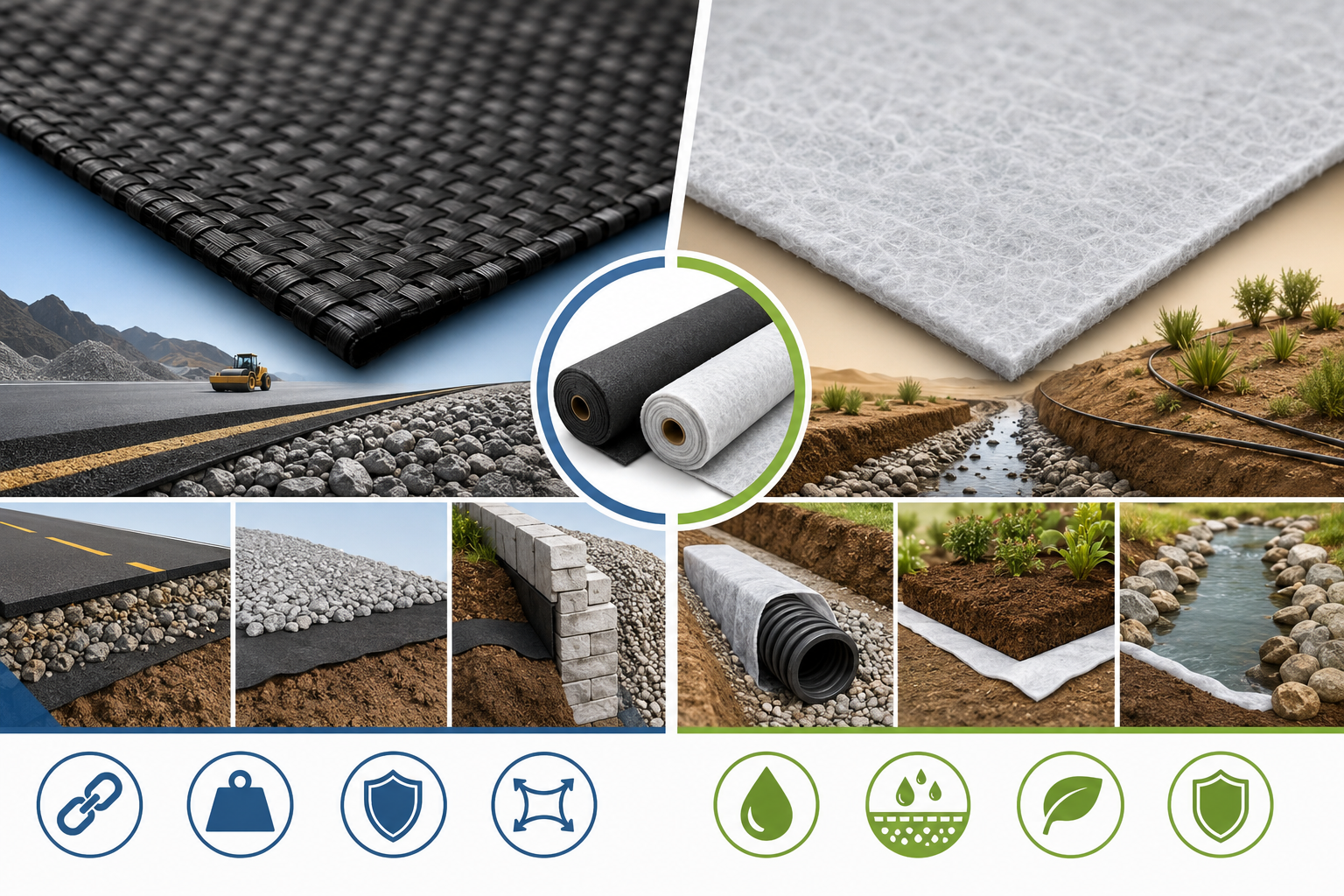
Woven geotextile is a strong synthetic fabric made by weaving polypropylene or polyester yarns together in a regular pattern. It is mainly used where strength, load support and soil stability are important.
Woven geotextiles are made from polypropylene or polyester yarns and tapes. These strands are crossed and woven together in a regular pattern, similar to traditional fabric. This weaving process creates a strong and stable structure that can handle heavy loads and provide good soil support.
What is Non Woven Geotextile
Non woven geotextile is a synthetic fabric made by bonding fibers together instead of weaving them. It has a soft, flexible structure and is commonly used where filtration, drainage, separation and protection are needed.
Non woven geotextiles are usually made from polypropylene or polyester fibres. The fibres are arranged randomly and then bonded together, commonly through needle-punching or sometimes by using heat.This process creates a flexible fabric with small spaces that allow water to pass through while helping hold soil particles in place.
Main Properties and Uses of Woven Geotextiles
Woven geotextiles have high tensile strength, so they can handle heavy loads without stretching too much. Their lower elongation helps keep the ground stable and spreads weight more evenly.They are also durable and strong, but they usually allow less water to pass through compared with many non-woven geotextiles.
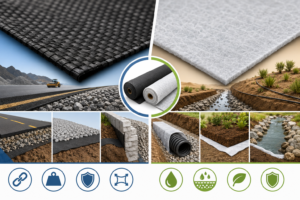
Woven geotextiles are commonly used in roads, driveways, embankments, and other heavy-load areas. They help spread weight, strengthen weak soil and improve ground stability.They are also useful for reinforcement and construction over weak subgrades, where extra support is needed to keep the surface strong and stable.
Main Properties Uses of Non Woven Geotextiles
Non woven geotextiles allow water to pass through easily, which makes them useful for drainage and filtration. They are also flexible and can stretch more than woven geotextiles.Depending on the grade, they can offer good puncture resistance and cushioning, which helps protect soil layers, drainage systems, and other materials.
Non woven geotextiles are commonly used in drainage systems, French drains, retaining walls and landscaping because they allow water to pass through while helping keep soil in place.They are also useful for soil filtration, erosion control, separation and geomembrane protection, where flexibility and cushioning are important.
Benefits and Drawbacks of Woven Geotextiles
Woven geotextiles are strong, durable and good at reinforcing weak soil and supporting heavy loads. Their high tensile strength makes them a reliable choice for stabilization projects.However, they usually have lower drainage and filtration ability than non-woven geotextiles. They are also less flexible and provide less cushioning.
Benefits and Drawbacks of Non Woven Geotextiles
Non woven geotextiles offer good filtration, drainage, and water flow. Their flexible structure also makes them useful for separation and cushioning in many projects.However, they usually have lower tensile strength than woven geotextiles. They may not be the best choice when strong reinforcement is the main need, and their performance can also depend on the GSM and project specifications.
Woven vs Non Woven Geotextile: How They Differ
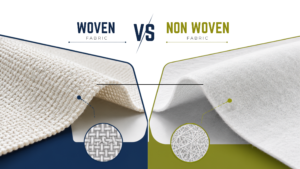
The main difference between woven and non woven geotextiles is how they are made and what they are designed to do. Woven geotextiles are usually better for strength and reinforcement, while non woven geotextiles are often better for drainage, filtration and flexibility.
| Factor | Woven Geotextile | Non Woven Geotextile |
| Structure | Woven yarns or tapes | Bonded fibres |
| Tensile Strength | Higher | Generally lower |
| Elongation | Lower | Higher |
| Permeability | Lower | Higher |
| Filtration | Limited or application-dependent | Excellent |
| Drainage | Lower | Excellent |
| Reinforcement | Excellent | Limited or application-dependent |
| Separation | Good | Good |
| Flexibility | Lower | Higher |
| Cushioning | Lower | Better |
| Typical Use | Stabilization and reinforcement | Drainage and filtration |
Where Woven and Non Woven Geotextiles Are Used
Roads and Heavy-Traffic Areas
Woven geotextiles are usually the better choice for roads and heavy-traffic areas because they provide strong reinforcement and better load distribution.
Drainage Systems
Non woven geotextiles are generally better for drainage systems because they allow water to pass through easily while helping filter out soil particles.
Soil Separation
Both types can be used for soil separation. Woven geotextiles work well when strength is also needed, while non woven geotextiles are better when filtration and water flow are important.
Erosion Control
Non woven geotextiles are often preferred for erosion control because they support filtration and water movement while helping keep soil in place.
Retaining Walls
Non woven geotextiles are commonly useful behind retaining walls where drainage and soil separation are important. Woven geotextiles may be used when extra reinforcement is required.
Landscaping
For gravel areas, pathways, and drainage-focused landscaping, non woven geotextiles are often a good choice. They help separate soil layers, improve drainage and reduce soil movement.
How to Choose the Right Geotextile
Choosing the right geotextile depends on what your project needs. Check the soil type, expected load, water flow, drainage, filtration, tensile strength, puncture resistance, elongation, GSM and opening size before making a decision.
You should also follow the project specifications and consider local environmental conditions.
Choose woven geotextile when: strength, reinforcement, and load support are the main priorities.
Choose non woven geotextile when: filtration, drainage, separation, flexibility, and protection are more important.
Which Geotextile Is Suitable for Oman?
Non woven geotextiles can work well for many projects in Oman where drainage, filtration, soil separation, erosion control, and water management are important. They are also useful in landscaping, infrastructure, and general construction projects.
If you are sourcing material from a non woven fabric manufacturer in Oman, make sure the fabric matches your project needs, such as GSM, water flow, and strength. For heavy-load roads or strong soil reinforcement, woven geotextiles may still be the better choice depending on the engineering requirements.
Benefits of Non Woven Geotextile for Oman Projects
Non woven geotextiles offer several practical benefits for projects in Oman. They provide good water filtration and drainage, help keep soil layers separate, and support erosion control.
Their flexible structure works well on uneven ground and can also protect membranes from damage. They are easy to install and available in different GSM options to suit different project needs. This makes them useful for infrastructure, landscaping, drainage and construction applications.
Conclusion
Woven geotextile is usually the better choice when your project needs high strength, reinforcement and load support. Non woven geotextile is more suitable when filtration, drainage, separation, flexibility and protection are the main needs.
The right choice depends on your soil conditions, water flow, expected load and project specifications. Always select the material based on the actual requirements of the project.