Landscape fabrics are absorbent or semi-absorbent membranes used under soil, mulches, or gravel in order to minimize weeds but they ensure the free access of air and water to the roots of plants. They are widely used both in gardens and in landscaping constructions to minimize maintenance activities while keeping the soil healthy.
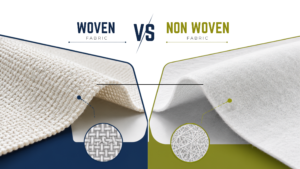
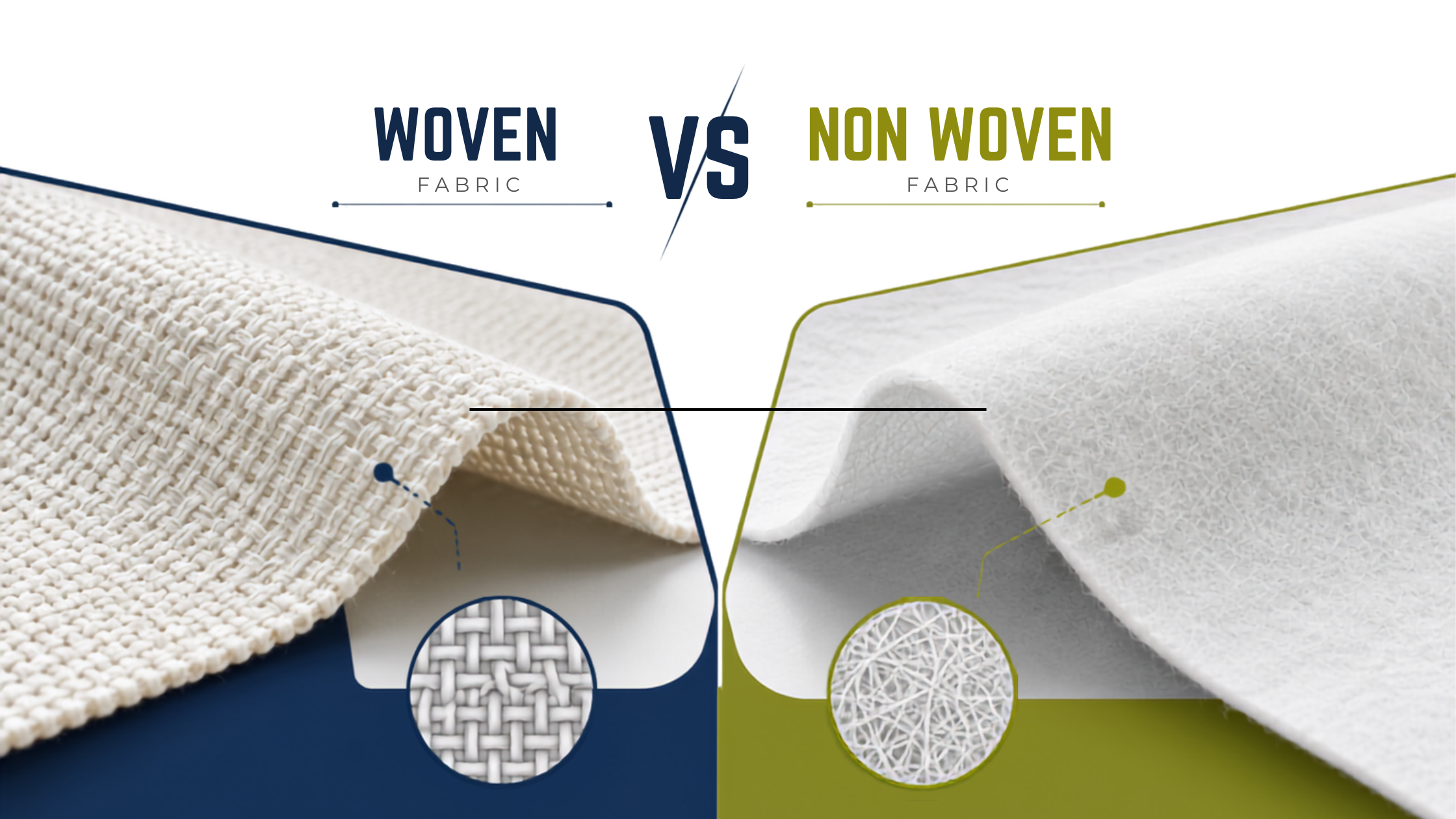
When comparing woven landscape fabric and non woven landscape fabric, it is important to note that the differences between them include manufacturing process, draining ability, and durability. While woven fabrics consist of threads interlaced to create a strong structure, non-woven landscape fabrics are made of bonded fibers.
This blog will provide you with detailed information about woven and non woven fabrics for landscapes. We will discuss manufacturing processes of both kinds of fabrics and make a comparative analysis.
What Is Woven Landscape Fabric?
The woven landscape fabric has an appearance of woven thread material, mostly using polypropylene thread material, with a strong grid-like weave similar to that of a textile. The main features of woven landscape fabric are:
- Strength and durability
- Good weed resistance
- Some water permeability, but not much compared to non-woven landscape fabric
- Long-lasting product
- Mainly made using polypropylene
- Tear-resistant and resistant to ultraviolet rays
Typical applications of woven landscaping fabric are that they are widely used as a weed barrier fabric under gravel paths, driveways, and high-traffic garden areas where long-term durability matters more than maximum water flow.
What Is Non Woven Landscape Fabric?
Non woven landscape fabric is produced by fusing together the fibers without weaving them; this is done either via heat, chemicals, or physical means to produce a felt material that is highly porous. The main features of non woven landscape fabric are:
- Very good filtration
- Water permeable
- Very good air and water flow
- Best for landscape fabric for drainage applications
- Can be obtained in various thicknesses and GSM grades
- Good soil separation properties
Some common uses of non woven landscape fabric include drainage applications, French drains, soil separation purposes, and landscape fabric for gravel applications where filtration is critical.
Woven vs Non Woven Landscape Fabric: Key Differences
Feature | Woven Landscape Fabric | Non Woven Landscape Fabric |
Manufacturing | Interwoven threads | Bonded fibers |
Strength | Generally higher | Varies by material |
Water permeability | Moderate | Generally higher |
Weed control | Excellent | Good |
Filtration | Limited | Excellent |
Drainage | Good | Excellent |
Durability | High | Depends on application |
Common use | Weed barriers | Drainage & filtration |
Woven vs Non Woven Landscape Fabric for Weed Control
Both materials block weeds, but they suit different conditions. Here’s how you can decide between a woven weed barrier and a non woven weed barrier for weed suppression specifically.
Woven fabric
Woven fabric is suitable when:
- Long-term weed suppression is required
- Durability is important
- The area experiences foot traffic
Non-woven fabric
Non-woven fabric is suitable when:
- Filtration is also required
- Water movement is a priority
- The application involves soil separation
Woven vs Non Woven Landscape Fabric for Drainage
In situations where drainage is the priority, the non woven fabric used for weed control purposes tends to play second role to the filtration capabilities of the fabric. The porous nature of the non woven fabric allows for free movement of water, while filtering off any fine soil particles; hence, making it the more preferred option in cases of landscape fabrics for drainage.
Requirement | Better Option |
Water drainage | Non-woven |
Soil filtration | Non-woven |
Weed barrier | Woven |
High durability | Woven |
Would you also like to read: Hydrophilic vs Hydrophobic Nonwoven Fabric
Best Landscape Fabric for Gravel Paths and Driveways
In the case of gravel pathways and driveways, it is more advisable to use woven landscape fabric. This fabric is less likely to be stretched, torn or penetrated by the movement of the feet or vehicles, and does not allow any gravel to seep through into the ground. Also, it withstands punctures more efficiently compared to non-woven fabric and stops gravel from seeping into the ground, thus becoming the best long-term solution. Non-woven landscape fabric may be used in case of light traffic gravel pathways where proper drainage is more important than strength.
How to Choose the Right Landscape Fabric
- Consider the purpose (weed control vs drainage vs filtration)
- Check the required durability for your site
- Consider water permeability needs
- Choose the appropriate GSM (grams per square meter) for the job
- Consider soil conditions
- Consider expected lifespan of the installation
Non woven Fabric Manufacturers
At Unique Solutions, we manufacture premium spunbond nonwoven fabric in custom GSM, width, and finishes built for durability, drainage, and weed control. Get in touch today and get the right fabric for your landscaping needs.
Conclusion
Ultimately, whether to use woven or non woven fabric is simply a matter of what the job requires. When longevity and weed suppression are your priorities, woven fabric is the way to go. However, if plant health and drainage are more important, then non-woven fabric should be used. In many cases, the choice of which fabric to use may depend on site specific factors like soil type and how long the landscaping will need to last. Whatever you choose, using the proper fabric in the proper GSM is essential.
Frequently Asked Questions
Q1: What’s the difference between landscape fabric and geotextile fabric?
Landscape fabric is a type of geotextile made specifically for weed control and garden use, while “geotextile” is the broader term covering fabrics used in civil engineering, drainage, and erosion control too.
Q2: Is non-woven landscape fabric better than woven for flower beds?
Non-woven fabric is often preferred for flower beds since it allows better air, water, and nutrient flow to plant roots.
Q3: Which landscape fabric lasts longer, woven or non-woven?
Woven landscape fabric generally lasts longer due to its tighter, more durable construction.
Q4: Can I use woven and non-woven fabric together?
Yes, some landscapers layer both to combine strong weed control with better drainage, depending on the project.